To view FAQs for all products, click here.
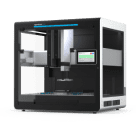
Yes, the Opentrons Flex’s side windows and front door are removable.
The Heater-Shaker Module can assist in automating a variety of wetlab workflows. Here is an example of a DNA Extraction protocol leveraging the Heater-Shaker Module.
Yes, this can be achieved through the Opentrons app. You will need to be connected to a computer that is on the same WiFi or wired network as the liquid handler.
Yes. Just like the OT-2, the Flex has full capability to accept custom or irregular labware. Our custom labware creation tools can be used to help create the compatible labware definitions that are required to use irregular labware with our software.
It is possible to use multiple modules of the same type on the OT-2. This is true for our Temperature Module, Magnetic Module, and Heater-Shaker Module. For a walkthrough on setting this up for your OT-2 and considerations when using multiple modules, please reference this guide.
You can use one computer running the Opentrons App to connect to multiple robots. This is true for both the Opentrons Flex and OT-2 robots.
OT-2 pipettes and OT-2 pipette tips are not compatible with the Opentrons Flex. The OT-2 pipette nose cone and Flex pipette nose cones are constructed differently, preventing cross-compatibility. OT-2 tip boxes/refills are also not compatible with the Flex.
Opentrons can only guarantee performance of the Flex when using our Flex pipette tips.
No, Opentrons’ OT-2 pipettes will not be compatible with the Opentrons Flex. The Opentrons Flex is intended for use with our Flex Pipettes.
Yes, Flex pipettes include pressure sensors for detecting liquid height. These sensors are contained within the A1 and H12 channels on the 96-channel pipette, and the outermost channels on the 8-channel pipette (1 & 8).
Labs within the Opentrons community have installed the OT-2 pipetting robot in biological safety cabinets (as well as in inert atmosphere glove boxes), including Labconco’s Logic Vue Class II enclosures and Baker’s AeroPROTECT 360 enclosures. We recommend you cross-check the dimensions of the OT-2 with those of your chosen biological safety cabinet.
Users do not need a computer connected to the Opentrons Flex to run a protocol. Users will need to build the protocol on a computer and upload it to the Flex. Once uploaded, the protocol can be ran solely off the display.
You do not need to know how to code to use the Opentrons Flex platform. Protocols can be created using Opentrons’ plug-and-play protocol design tools. We also have an Applications Engineering team that can build custom protocols for you.
You do not need to know how to code to use the Opentrons platform. Protocols can be created using Opentrons’ plug-and-play protocol design tools. We also have an Applications Engineering team that can build custom protocols for you.
The Opentrons Flex 8-channel and 96-channel pipettes will aspirate and dispense the same volume with all channels at the same time. Volume is not independently controlled across channels.
Yes, Opentrons Flex users will be able to offset the 96-channel pipette head to pick up 8 tips (1 column). This functionality can only be achieved through the Python API.
Crashes will be detected by the Opentrons Flex by comparing the actual vs. intended move of the embedded motors.
For example, If the robot expected 2 motor rotations, but only 1 rotation is completed due to a crash(which stops the motors from moving), then the robot would detect a discrepancy between intended move and actual. This would then throw an error and let you know you need to recalibrate.
Due to the open-source nature of the robot, many of our users have found success integrating the OT-2 with third party lab equipment.
Integrations such as these would be a DIY project taken on by your lab, and would not fall under the scope of the Opentrons Support team.
Yes, we are still using stepper motors with linear encoders. This enables us to track the steps of the motor and handle errors with positioning.
For those familiar with the homing patterns of the OT-2 robot, we no longer rely on rehoming the axis with limit switches in an open-looped feedback architecture. We can use a closed-loop system, powered by our new encoders to reduce the number of times that we have to home in a protocol.
This is not an optical process. The robot uses capacitance sensors and a calibration probe (shipped with Flex pipettes) to perform automated calibration. Capacitive sensing for automated calibration is done by having a current run through the pipette’s metal tip at the bottom and then through a calibration tip until it’s grounded.
Users can save up to 8 protocols to the Opentrons Flex display.
To pick up tips, The Opentrons Flex 96-Channel Pipette requires tip racks be in a 96-Channel Tip Rack Adapter. Four 96-Channel Tip Rack Adapters are included with the purchase of one Flex 96-Channel Pipette.
Yes! When carrying out multiple protocols on a Heater-Shaker Module, it may be required to have the module heat, but not shake. This option is possible on the Heater-Shaker Module.
The Opentrons Flex is not currently CFR 21 Part 11 compliant. Opentrons is in the process of pursuing CFR Part 11 compliance for the Flex.
Yes. Compatible labware for the Opentrons Flex Magnetic Block includes:
The Opentrons Flex requires on-site installation. We also offer both remote and on-site services solutions, as well as annual preventative maintenance.
You can find more information on Opentrons’ service offerings here.
The OT-2 has the following certifications: CE, FCC, NRTL, ISO 9001, CB
Note that the robot is not IVD or GMP certified/validated
You can find our community’s collection of OT-2 protocols within our Protocol Library. Feel free to search the library for a protocol that matches your lab’s workflows!
If you don’t see a protocol that matches your lab’s processes, we offer a couple different options for creating your protocol. Additionally, you can leverage our team of engineers for a custom protocol development.
The Opentrons Flex Magnetic Block GEN1 is compatible with the Opentrons Flex robot, while the OT-2 Magnetic Module GEN2 is compatible with the OT-2 robot.
The Magnetic Block is a plate-sized magnet that relies on the Opentrons Flex Gripper GEN1 to move your plates on and off the block. Conversely, the Magnetic Module is a powered unit that turns the magnets on and off, and is intended for use with a liquid handling robot without a gripper.
20 cm (8 in) of side and back clearance for cables, USB connections, and to dissipate exhaust from instruments like the Thermocycler or Temperature Module.
Out of the box, the OT-2 can support any automation-compatible, ANSI/SLAS compliant well plates, plus a wide range of snap-cap and screw-cap tubes up to a 50 mL conical with our 4-in-1 Tube Rack. You can see the full range of supported labware in our Labware Library.